By Pastor Lubinda Kapuyi
Introduction to Luke Chapter 6
In Luke chapter 6, we will have an opportunity to look at the Sabbath (vv. 1-11), the selection of the 12 apostles from among the disciples (vv. 12-19), and the Beatitudes (vv. 20-26). I have written an article about the Sabbath, and you might want to read it to understand why the Pharisees waged war against Jesus because of the Sabbath.
In this chapter, we will also take a look at various Christian ethics taught by Jesus (vv. 27-49). These are important because we all come into the Kingdom of God carrying with us worldly ethics or principles of life that we need to put off and dress ourselves with new ethics or principles of life in Christ Jesus (Colossians 3:5-10). Jesus will be teaching about ethics to do with our enemies, our relationships with other people, the treasure we carry in us, and being sincere to who we are in Christ and not judge others.

Courtesy of Lumo Project Films – www.lumoproject.com
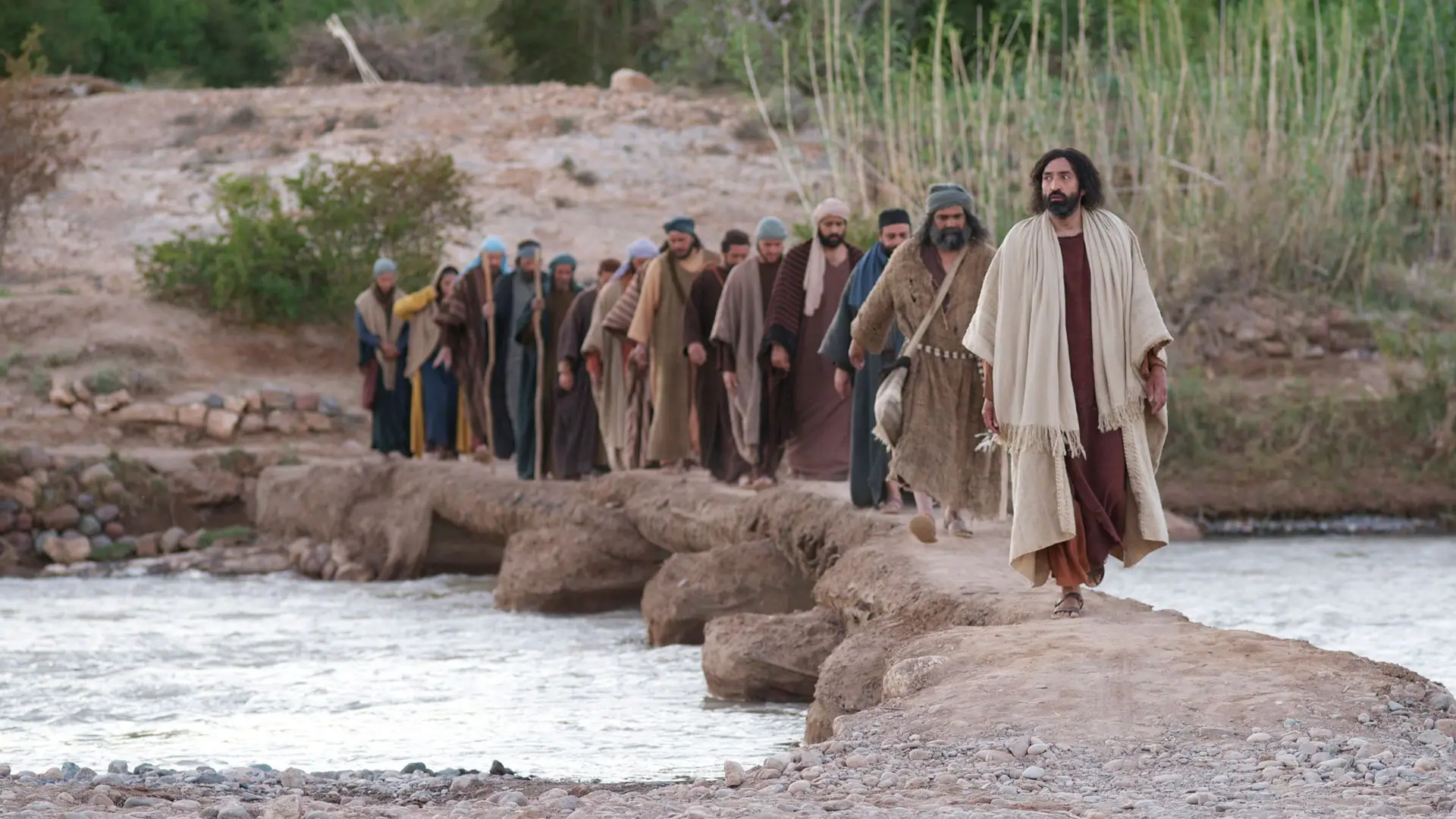
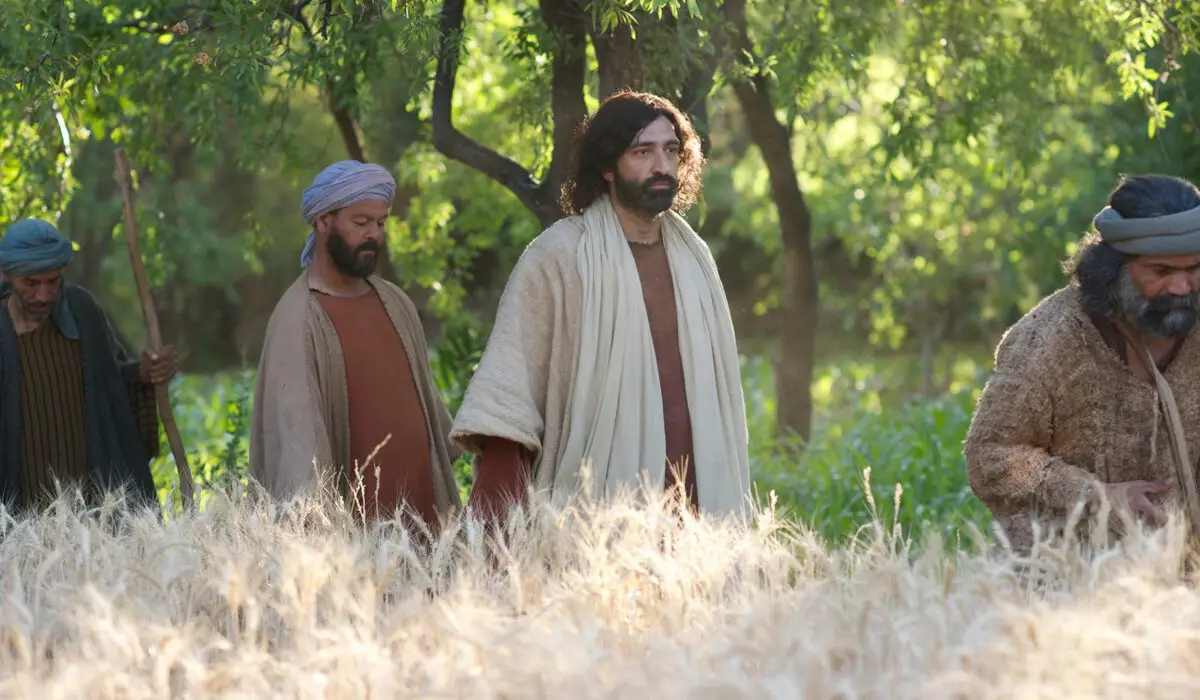
On a Sabbath, while he was going through the grainfields, his disciples plucked and ate some heads of grain, rubbing them in their hands. But some of the Pharisees said, “Why are you doing what is not lawful to do on the Sabbath?” And Jesus answered them, “Have you not read what David did when he was hungry, he and those who were with him: how he entered the house of God and took and ate the bread of the Presence, which is not lawful for any but the priests to eat, and also gave it to those with him?” And he said to them, “The Son of Man is lord of the Sabbath.” (The Holy Bible: ESV, Luke 6:1–5).
Lord of the Sabbath – Part 1
There was a great deal that was being put in place in the process of honoring the Sabbath. It became the heart of the law, and many prohibitions were added to help safeguard the Sabbath. As the disciples plucked and ate some heads of grain, rubbing them in their hands (6:1), the Pharisees interpreted this process as work, and it was done on the Sabbath. What astonished them was also that Jesus, as the master of the disciples, was not intervening, a reason enough to include him in the breaking of the law as well.
“Why are you doing what is not lawful to do on the Sabbath (6:2)?”
The challenge of the Sabbath was not in obeying it, but in defining what was lawful or not lawful to do on the Sabbath. God said, “Remember the Sabbath day by keeping it holy. Six days you shall labor and do all your work, but the seventh day is a Sabbath to the LORD your God. On it you shall not do any work, neither you, nor your son or daughter, nor your manservant or maidservant, nor your animals, nor the alien within your gates” (Exodus 20:8-10). The biggest task here is to define what activities must be categorized as work and what other activities are not categorized as work. Who has the authority to define these categories, and who gave this person such authority? This is what will be the main cause of the tension between Jesus and the Pharisees. The Pharisees believed that they had the authority and power to define for everyone the activities that were lawful to do on the Sabbath. Did Jesus agree to that? If Jesus and the disciples had broken the Sabbath, who had the authority to hold them accountable and on what basis?
Jesus, Son of David, gave the Pharisees a historical example of David having authority to defy what was established as law in the temple. Though David knew that it was not lawful to eat the bread of the Presence in the House of God, he took and ate the bread of the Presence, which was only lawful for priests to eat, and gave it to those with him because they were hungry (1 Samuel 21:1-6). The idea behind this example Jesus is giving is that if David, whose Lord is Jesus Christ, had the boldness to do this, how much more his LORD? Though it is something hard for the Pharisees to accept,
“The Son of Man is LORD of the Sabbath” (6:5).
The one who created the Sabbath is Jesus, and he has the power and authority to define what truly breaks the Sabbath and what does not break the Sabbath. He has the authority to hold the teachers of the Law accountable if they are not teaching the Sabbath in a correct manner. Yet, this is far from the perception of the Pharisees because in their view, Jesus is the son of Joseph and Mary.
Courtesy of Lumo Project Films – www.lumoproject.com
On another Sabbath, he entered the synagogue and was teaching, and a man was there whose right hand was withered. And the scribes and the Pharisees watched him, to see whether he would heal on the Sabbath, so that they might find a reason to accuse him. But he knew their thoughts, and he said to the man with the withered hand, “Come and stand here.” And he rose and stood there. And Jesus said to them, “I ask you, is it lawful on the Sabbath to do good or to do harm, to save life or to destroy it?” And after looking around at them all, he said to him, “Stretch out your hand.” And he did so, and his hand was restored. But they were filled with fury and discussed with one another what they might do to Jesus. (The Holy Bible: ESV, Luke 6:6–11).
Lord of the Sabbath – Part 2
On another Sabbath, Jesus was teaching in the synagogue, and there was a man present whose right hand was withered. And the scribes and the Pharisees “watched him,” to see whether he would heal on the Sabbath, so that they might find a reason to accuse him. Pay attention to this:
- The Pharisees watched Jesus – they were law enforcers.
- They established in their minds that to heal was categorized as work.
- They believed they had the authority to hold Jesus accountable concerning the Sabbath (though Jesus was the one in the position to hold them accountable).
Jesus is not only the LORD of the Sabbath but the LORD of every person. He already knew their thoughts, and he said to the man with the withered hand, “Come and stand here.” Jesus was ready to confront the Pharisees on the issues of the Sabbath by asking them rhetorical questions of reflection.
Question 1: Between doing good or doing harm, which is lawful on the Sabbath?
Question 2: Between saving a life or destroying it, which is lawful on the Sabbath?
These reflective rhetorical questions are coming from the maker of the law himself. If you don’t understand what a rhetorical question is, allow me to explain. Normally, you ask a question to obtain information that you don’t possess. In a rhetorical question, you already have the information you need. Therefore, you ask for the purpose of making a point, and you don’t really expect the people you are asking to provide you with feedback. The Pharisees understood that this was a rhetorical question and never provided Jesus with an answer to any of his questions. Again, God did not clarify on this point when he gave them the law about the Sabbath in Exodus 20, but it is clear from the rhetorical questions of Jesus, the LORD of the Sabbath, that there is nothing wrong with doing good or saving life on the Sabbath. Healing a man whose right hand is withered would also be categorized as doing good, as well as saving a life. The difficulty with Jesus’ point is that it raises other questions. Is it possible to do good or save lives on the Sabbath without working? What’s the thin line that exists between not doing any work on the Sabbath (Exodus 20:10) and doing good or saving lives on the Sabbath (Luke 6:9)? Jesus, after looking around and seeing no response, said to the man, “Stretch out your hand.” And he did so, and his hand was restored. The Pharisees left the synagogue that day, filled with fury and holding a grudge against Jesus (v. 11).

Courtesy of Lumo Project Films – www.lumoproject.com
In these days he went out to the mountain to pray, and all night he continued in prayer to God. And when day came, he called his disciples and chose from them twelve, whom he named apostles: Simon, whom he named Peter, and Andrew his brother, and James and John, and Philip, and Bartholomew, and Matthew, and Thomas, and James the son of Alphaeus, and Simon who was called the Zealot, and Judas the son of James, and Judas Iscariot, who became a traitor.
And he came down with them and stood on a level place, with a great crowd of his disciples and a great multitude of people from all Judea and Jerusalem and the seacoast of Tyre and Sidon, who came to hear him and to be healed of their diseases. And those who were troubled with unclean spirits were cured. And all the crowd sought to touch him, for power came out from him and healed them all. (The Holy Bible: ESV, Luke 6:12–19).
The Twelve Apostles
Jesus was a man of prayer. In his days, he had the habit of always going to the mountain to pray. Just before the appointment of the twelve apostles, Jesus went out to the mountain to pray, and all night he continued in prayer to God. Sometimes, people confuse apostles with disciples. Jesus had many disciples, and it is from this group of disciples that, after he was done with his prayers, he called all of them and chose from them twelve, whom he named apostles:
List of the Twelve Apostles of Jesus
- Simon, whom he named Peter.
- Andrew, brother of Peter.
- James, brother of John.
- John, brother of James.
- Philip
- Bartholomew.
- Matthew.
- Thomas.
- James, the son of Alphaeus.
- Simon the Zealot.
- Judas, the son of James.
- Judas Iscariot, who betrayed Jesus.
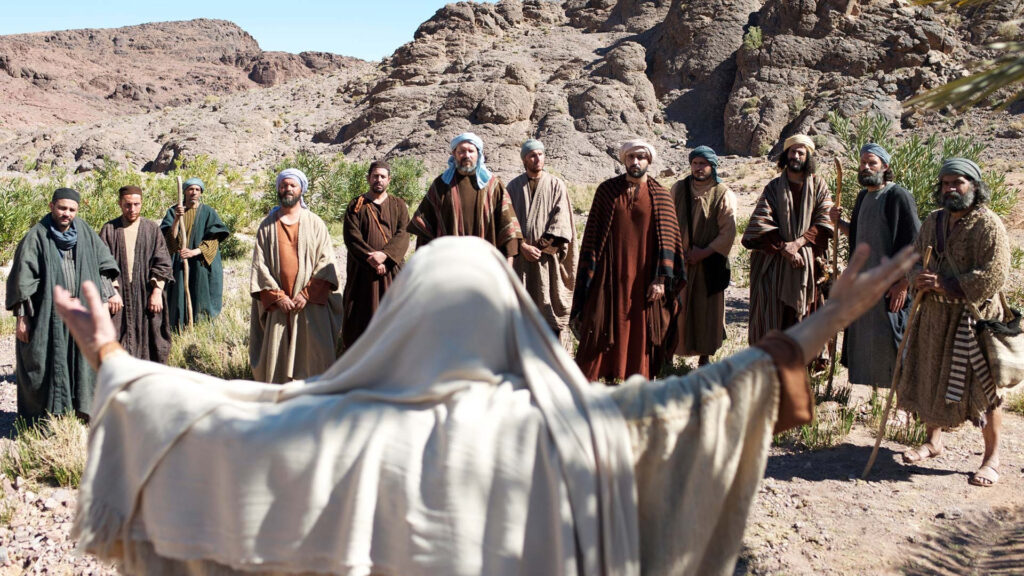
Jesus, after choosing the 12 apostles, came down with them, together with a great crowd of his disciples, and a great multitude of people from all Judea and Jerusalem and the seacoast of Tyre and Sidon, who came to hear him and to be healed of their diseases. Jesus stood on a level place, and those who were troubled with unclean spirits were cured, and all crowds sought to touch him, for power came out from him and healed them all (6:17-19). What you must not miss is that Jesus was most of the time moving with these three groups: (a) the twelve apostles, (b) the disciples, and (c) the multitudes. The twelve apostles are all disciples, but not all disciples are apostles.
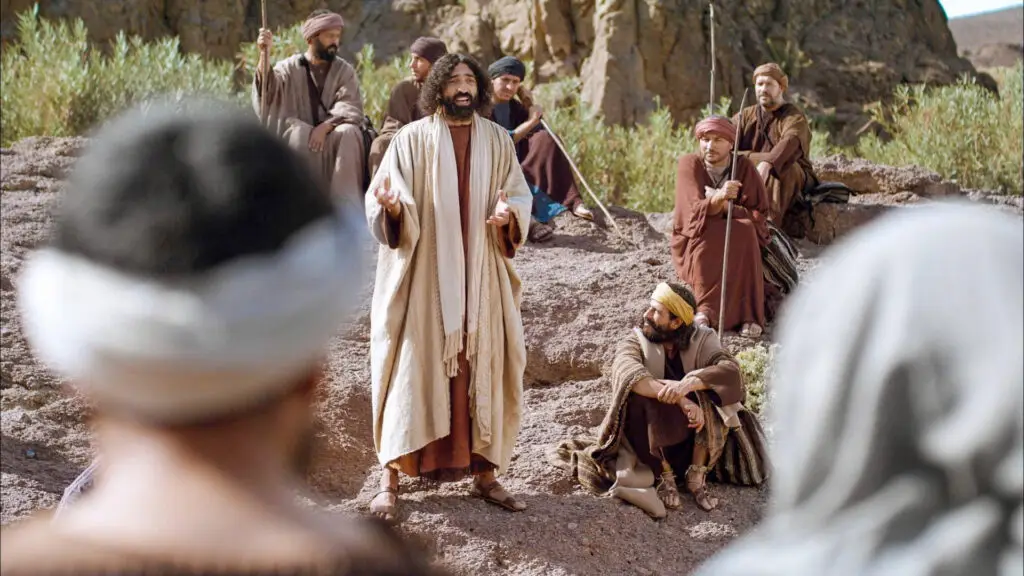
It is at this moment that he lifted his eyes to his disciples (including apostles) and began to declare blessings upon them. The difference between the beatitudes in Luke and Matthew is that in Luke, Jesus was preaching on a plain (Luke 6:20-49), while in Matthew, he was preaching on a mountain (the Sermon on the Mount – Matthew 5 – 7). One thing we are going to do is count how many of these beatitudes there are.
Courtesy of Lumo Project Films – www.lumoproject.com
Courtesy of Lumo Project Films – www.lumoproject.com
THE BEATITUDES
The Beatitudes are not conditions for entering the kingdom of God, but blessings pronounced on those who have already entered (The ESV Study Bible Notes, p.1962). Jesus not only gave them beatitudes but also woes, which are the exact opposite of beatitudes. Consider beatitudes as blessings and woes as curses. This scenario is like a replica or fulfillment of Moses’ Mount Gerizim and Ebal declaration event, where he declared blessings and curses upon Israel (Deuteronomy 27:1-28:68).
Blessings
Luke 6:20-23
- Blessed are you who are poor (in spirit), for yours is the kingdom of God.
- Blessed are you who are hungry now (and thirsty for righteousness), for you shall be satisfied.
- Blessed are you who weep now, for you shall laugh (comforted).
- Blessed are you when people hate you and when they exclude you and revile you and spurn your name as evil, on account of the Son of Man! Rejoice in that day, and leap for joy, for behold, your reward is great in heaven; for so their fathers did to the prophets.
Matthew 5:1-12 (a continuation…)
- Blessed are the meek, for they shall inherit the earth.
- Blessed are the merciful, for they shall receive mercy.
- Blessed are the pure in heart, for they shall see God.
- Blessed are the peacemakers, for they shall be called sons of God.
- Blessed are those who are persecuted for righteousness’ sake, for theirs is the kingdom of heaven (note that this one is similar but different from number four).

Courtesy of Lumo Project Films – www.lumoproject.com
Woes (Curses
Luke 6:24-26
- But woe to you (cursed are you) who are rich, for you have received your consolation
- But woe to you (cursed are you) who are full now, for you shall be hungry.
- But woe to you (cursed are you) who laugh now, for you shall mourn and weep.
- But woe to you (cursed are you), when all people speak well of you, for so their fathers did to the false prophets.
Luke 11:42-52 (a continuation…)
- But woe to you (cursed are you) Pharisees! For you tithe mint and rue and every herb, and neglect justice and the love of God. These you ought to have done, without neglecting the others.
- But woe to you (cursed are you) Pharisees! For you love the best seat in the synagogues and greetings in the marketplaces.
- But woe to you (cursed are you)! For you are like unmarked graves, and people walk over them without knowing it.” Whitewashed tombs, which outwardly appear beautiful, but within are full of dead people’s bones and all uncleanness (Matthew 23:27).
- But woe to you (cursed are you), lawyers also! For you load people with burdens hard to bear, and you yourselves do not touch the burdens with one of your fingers.
- But woe to you (cursed are you)! For you build the tombs of the prophets whom your fathers killed.
- But woe to you (cursed are you) lawyers! For you have taken away the key of knowledge. You did not enter yourselves, and you hindered those who were entering.
Matthew 23:13-36 (a continuation…)
- But woe to you (cursed are you), scribes and Pharisees, hypocrites! For you travel across sea and land to make a single proselyte, and when he becomes a proselyte, you make him twice as much a child of hell as yourselves.
- But woe to you (cursed are you), blind guides, who say, ‘If anyone swears by the temple, it is nothing, but if anyone swears by the gold of the temple, he is bound by his oath.
- But woe to you (cursed are you), scribes and Pharisees, hypocrites! For you clean the outside of the cup and the plate, but inside they are full of greed and self-indulgence.
As we continue, pause and reflect on these blessings and curses. How do they relate to your life as a Christian? The Pharisees and scribes or lawyers thought they were walking rightly before God. When Jesus carefully examined their relationship and fellowship with God, the results were not that positive. The Blessings are meant to encourage each one of us in our walk of perseverance in Christ, while the curses are not meant to make us lose our salvation, which is not possible, but to encourage us to abandon our hypocrisy before God. You can’t say you are in fellowship with God when you are secretly walking in darkness or sin (1 John 1:6-10).
CHRISTIAN ETHICS (vv. 27 – 49)

Courtesy of Lumo Project Films – www.lumoproject.com
A Christian and his Enemies (vv. 27-36)
“But I say to you who hear, Love your enemies, do good to those who hate you, bless those who curse you, pray for those who abuse you. To one who strikes you on the cheek, offer the other also, and from one who takes away your cloak do not withhold your tunic either. Give to everyone who begs from you, and from one who takes away your goods, do not demand them back. And as you wish that others would do to you, do so to them. “If you love those who love you, what benefit is that to you? For even sinners love those who love them. And if you do good to those who do good to you, what benefit is that to you? For even sinners do the same. And if you lend to those from whom you expect to receive, what credit is that to you? Even sinners lend to sinners, to get back the same amount. But love your enemies, and do good, and lend, expecting nothing in return, and your reward will be great, and you will be sons of the Most High, for he is kind to the ungrateful and the evil. Be merciful, even as your Father is merciful (The Holy Bible: ESV, Lk 6:27–36).
One of the main challenging things to do for a Christian is to abandon worldly ethics or principles that you grew up with to adopt good biblical ethics in life. According to the evaluation of Jesus on our traditional and cultural ethics:
- We are prone to love only those who love us.
- We are prone to do good only to those who do good to us.
- We are prone to lend only to those from whom we expect to receive.
- …and the list continues!
In developing good biblical ethics, we need to consider the questions that Jesus asked in relation to our human ethics. Every disciple must live daily to please his master, and there is no better way to please God than desiring to be like Jesus every day: in our thoughts and in how we live with people around us.
- How does loving only those who love you transform you into the image and character of Christ?
- How does doing good to only those who do good to you transform you into the image and character of Christ?
- How does lending only to those whom you expect to receive back transform you into the image and character of Christ?
- …and the list continues!
Jesus Christ, as we continue to learn about him in the Gospel of Luke, is kind to the ungrateful and the evil. Being a child of God and developing good Christian ethics means being merciful as Jesus is merciful, being Holy as Jesus is Holy, loving our enemies, doing good to those who hate us, blessing those who curse us, praying for those who abuse us, giving to everyone who begs us, lending and expecting nothing in return, and doing to others as we wish that they do to us.
A Christian and the Failures of Others (vv. 37-42).
“Judge not, and you will not be judged; condemn not, and you will not be condemned; forgive, and you will be forgiven; give, and it will be given to you. Good measure, pressed down, shaken together, running over, will be put into your lap. For with the measure you use it will be measured back to you.” He also told them a parable: “Can a blind man lead a blind man? Will they not both fall into a pit? A disciple is not above his teacher, but everyone when he is fully trained will be like his teacher. Why do you see the speck that is in your brother’s eye, but do not notice the log that is in your own eye? How can you say to your brother, ‘Brother, let me take out the speck that is in your eye,’ when you yourself do not see the log that is in your own eye? You hypocrite, first take the log out of your own eye, and then you will see clearly to take out the speck that is in your brother’s eye (The Holy Bible: ESV, Lk 6:37–42).
One of the most important ethics of the Christian life is to know what to do with the weaknesses and failures of the people we relate to, whether believers or unbelievers. Jesus once again points out our fallen nature. In our hypocrisy built on human fallen nature, we easily notice the speck that is in our neighbor’s eye but cannot see the log that is in our own eye.
- Are we in a position to judge people’s weaknesses and failures?
- Are we in a position to condemn people whom we believe deserve condemnation?
- Are we in a position to decide who must be forgiven or who must not be forgiven?
- Are we in a position to decide whom we can give to and whom we cannot give to?
Healthy Christian ethics demand that we recognize the place of Jesus Christ in our lives and in the lives of others. He is the Judge, the one who condemns, the one who forgives, our provider, and the one who examines every heart (Hebrews 4:13). He monitors how we relate with both the righteous and the unrighteous, intending to see that we are daily being transformed into his image and character. God applies the same principle that he has given to us:
- In our relationships with people: “And as you wish that others would do to you, do so to them (v. 31).
- In our relationship with God: “For with the measure you use (towards other people) it will be measured back to you (God will render the same measure to you)” (Luke 6:38).
Jesus summarizes his teaching in one rhetorical parable: “Can a blind man lead a blind man? Will they both not fall into a pit (v. 39)? All of us human beings are born in sin (Psalm 51:5), and we are naturally blind to sin’s deceitfulness. We are incapable of leading another person into the light path that we ourselves have never walked. The only chance we have as disciples of Christ is to learn from our master, and when we are fully trained, we will be like our teacher, Jesus Christ (v. 40). Our task is to bring people to Christ, the shepherd of their souls.
The Treasure in a Christian's Heart (vv. 43-45).
“For no good tree bears bad fruit, nor again does a bad tree bear good fruit, for each tree is known by its own fruit. For figs are not gathered from thornbushes, nor are grapes picked from a bramble bush. The good person out of the good treasure of his heart produces good, and the evil person out of his evil treasure produces evil, for out of the abundance of the heart his mouth speaks (The Holy Bible: ESV, Lk 6:43–45).

Courtesy of Lumo Project Films – www.lumoproject.com
“The heart (of man) is deceitful above all things and beyond cure. Who can understand it?” (Jeremiah 17:9)
“Above all else, guard your heart, for everything you do flows from it.” (Proverbs 4:23).
Jesus, in teaching about Christian ethics, turned to the matters of the heart because it is the center of ethics. Your heart is the center of your thought process, which involves your mind, your conscience, and your subconscious. Every person has something to give out, a treasure they carry in them, and the heart is the storage center of all this treasure. The mouth or the tongue is the exit door for the treasure that a person carries, and it is this treasure that defines a man, whether he is good or bad. “The good person out of the good treasure of his heart produces good, and the evil person out of his evil treasure produces evil, for out of the abundance of the heart his mouth speaks” (v. 45).
The disaster we have in human ethics is that there is too much expectation from a depraved man. You cannot expect too much from a man born in sin, whether he is a husband, wife, child, worker, student, friend, etc. Listen to what Jesus said: “For no good tree bears bad fruit, nor again does a bad tree bear good fruit, for each tree is known by its own fruit. For figs are not gathered from thornbushes, nor are grapes picked from a bramble bush (v. 44). Ethically, there is not much to expect from the heart of man conceived and born in sin, “For out of the heart come evil thoughts, murder, adultery, sexual immorality, theft, false witness, and slander” (Matthew 15:19). James also emphasizes how we ought to ethically use our tongue.
“With the tongue we bless our Lord and Father, and with it we curse people who are made in the likeness of God. From the same mouth come blessing and cursing. My brothers, these things ought not to be so. Does a spring pour from the same opening both fresh and salt water? Can a fig tree, my brothers, bear olives, or a grapevine produce figs? Neither can a salt pond yield fresh water” (James 3:9-12). The point here is that it is not ethically correct to expect blessings from a man whose heart is evil, or to expect curses from a man whose heart is transformed by the Gospel.
A Christian and Application of God's Word (vv. 46-49)
“Why do you call me ‘Lord, Lord,’ and not do what I tell you? Everyone who comes to me and hears my words and does them, I will show you what he is like: he is like a man building a house, who dug deep and laid the foundation on the rock. And when a flood arose, the stream broke against that house and could not shake it, because it had been well built. But the one who hears and does not do them is like a man who built a house on the ground without a foundation. When the stream broke against it, immediately it fell, and the ruin of that house was great” (The Holy Bible: ESV, Lk 6:46–49).
In proper Christian ethics, one must understand that prayer, teaching, preaching, and evangelism are not what build one’s ethics, but a good study and application of the principles of the Word of God. Jesus compares a Christian who lives under Biblical ethics in his life to “a man who dug deep and laid the foundation on the rock. And when a flood arose, the stream broke against that house and could not shake it, because it had been well built” (v. 48). Some Christians may hold titles such as “Man of God,” “Prayer Warrior,” “Evangelist,” “Apostle,” or “Prophet,” but their lives often lack biblical ethics; they fail to apply the Word of God properly in their lives. These men usually are setting them up for a great downfall, and Jesus compares them to “a man who built a house on the ground without a foundation. When the stream broke against it, immediately it fell, and the ruin of that house was great” (v. 49). Many know how to observe and interpret the Word of God. Many can explain the way of salvation to you and write commentaries and theological books about it. Many can hold great names in this world, and great preachers or evangelists of this world. But if we fail to apply what the Word says in our own lives, like Solomon says, “Vanity of vanities, says the Preacher, vanity of vanities! All is vanity” (Ecclesiastes 1:2).
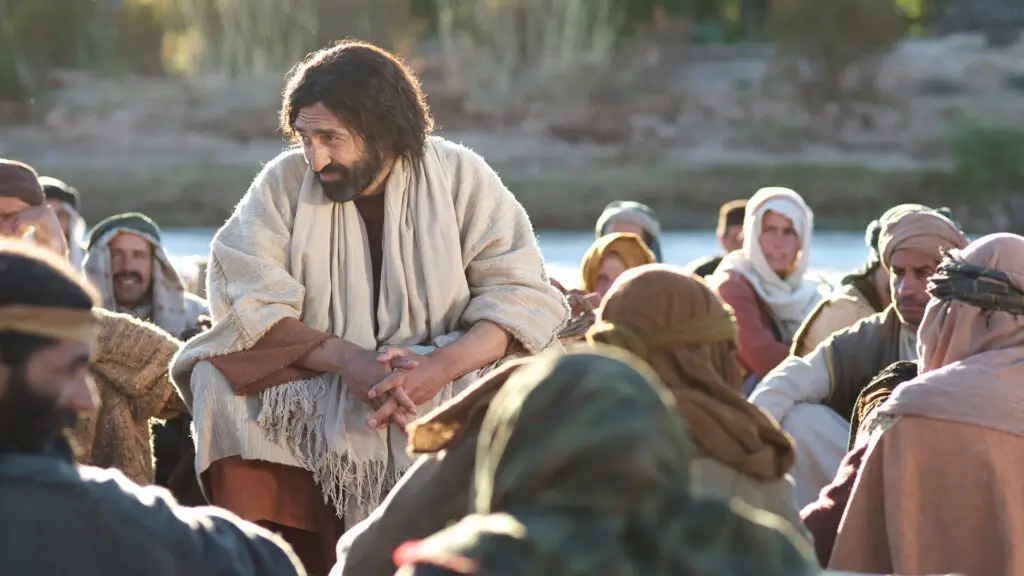
Courtesy of Lumo Project Films – www.lumoproject.com
Don’t forget to follow our church’s Facebook page for more sound biblical doctrine. I would also like to know your questions and comments in the comments section below.